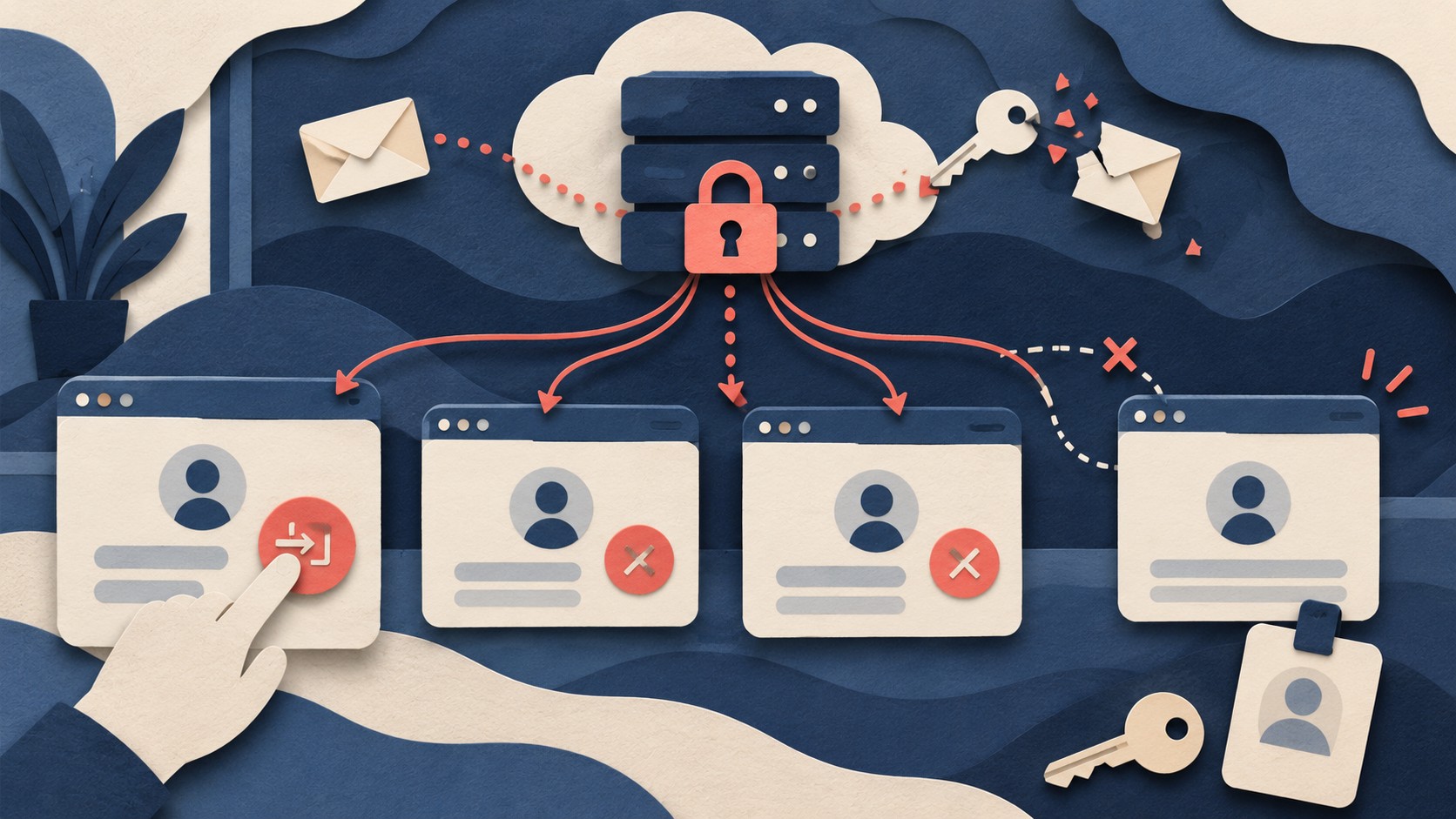
A user can log out in one tab while another tab still shows a signed-in screen. The HTML Standard uses this case to illustrate BroadcastChannel. Tabs that create a channel with the same name can send each other a logout signal. The sender updates its own screen because it does not receive its own broadcast.
Send a signal after logout
End the session through your application’s logout flow first. OWASP’s session guidance calls for server-side invalidation when a user logs out. A channel message updates other tabs; it does not invalidate the session for them.
const channel = new BroadcastChannel("auth");

channel.onmessage = ({ data }) => {
  if (data?.type === "logout") showSignedOut();
};

async function logOut() {
  await endSessionOnServer();
  channel.postMessage({ type: "logout" });
  showSignedOut();
}
Here, endSessionOnServer() is your application’s logout request, and showSignedOut() clears its signed-in view. The await keeps the success signal behind the server response. Handle a failed request in the logout control so the user can see that logout did not finish. The standard’s example likewise separates the logout operation from the screen update and broadcast.
Account for storage partitions
A shared origin and channel name do not guarantee delivery. MDN’s Broadcast Channel guide explains that an app embedded on another site may be unable to message a standalone tab of that same app because the browser places them in different storage partitions.
The standard describes sending messages to other channel objects already set up for that name. A tab opened later has no earlier logout message to receive. Treat the broadcast as a prompt to update an open screen, and check session state when a page loads or becomes active. Keep access decisions tied to the server-side session, as OWASP advises.
What to do
Implement server-side logout, then broadcast a small logout event after it succeeds. Have receiving tabs clear their signed-in views. Recheck the session on page load and return to an inactive tab. Test ordinary tabs and embedded pages separately. Close a channel when its page component no longer needs it; the HTML Standard recommends closing unused channels so they can be collected.
The Campfire
No commentsNobody has pulled up a log by this one yet. Be the first to say what you make of it.
Held for the desk. It appears after a look.