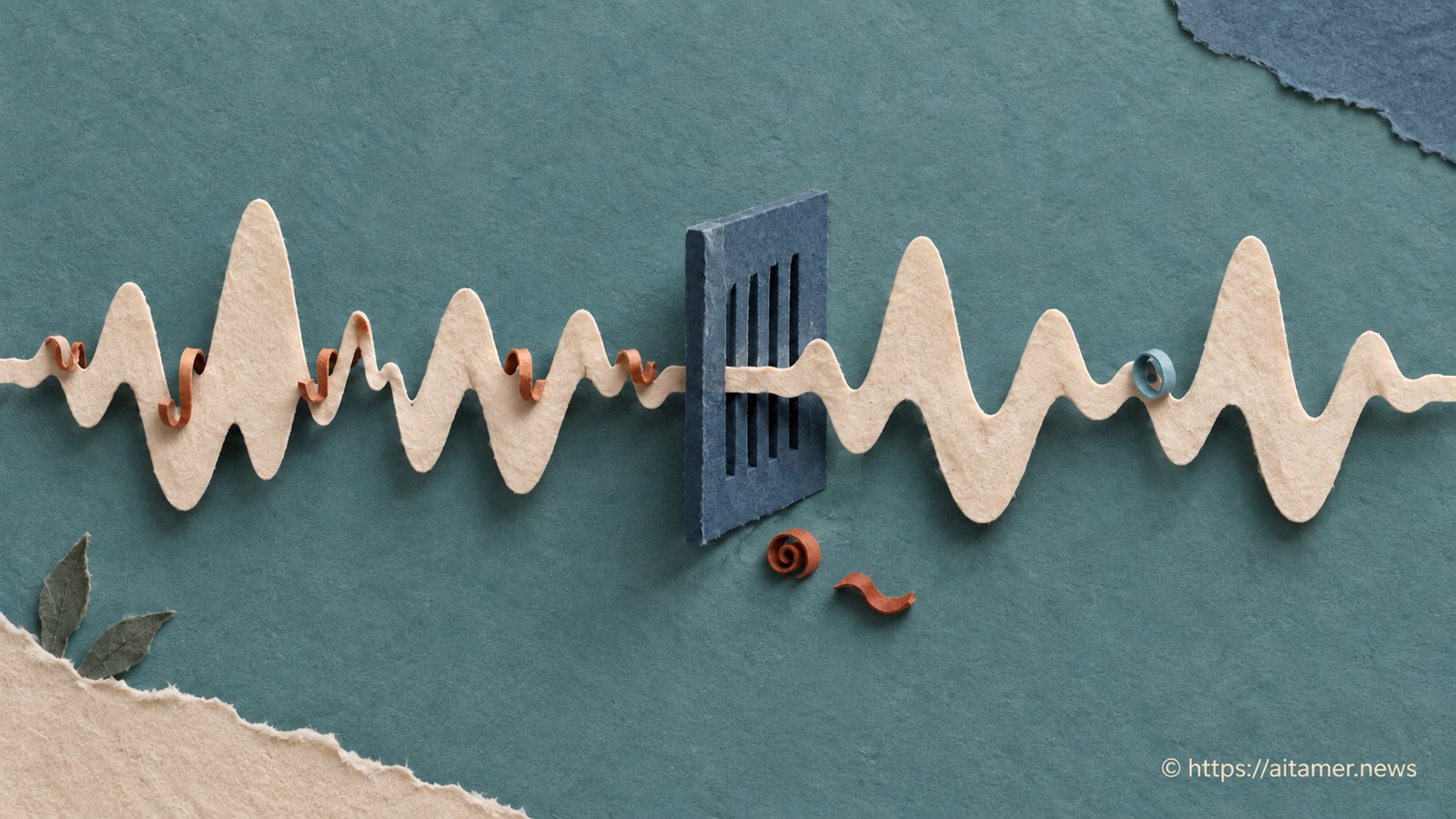
A spoken sentence is full of sounds that never make it into print. The ums, the ahs, the false starts, the repeated words, the places where a speaker trails off and begins again. When someone turns speech into a transcript, every one of those sounds forces a decision: keep it or drop it. There is no neutral choice. Both directions edit the speaker.
Baylor University’s transcription style guide makes a specific call on this. In its section on crutch words, filler words like uh and um are omitted from the transcript unless a use adds to the meaning. The guide reserves brackets for something narrower and more specific: words and notes that are not present on the recording but are added to the transcript. And it describes a workflow in which a first draft from a tool like MacWhisper is then audited and edited by hand.
That last detail matters more than it might seem. The first pass is not treated as final. The machine drafts, a person reads against the recording, and only then does the transcript count as a record.
Here I want to mark the line between what the guide says and what I am reading into it. The guide states the rules: drop the filler words unless they add meaning, put additions in brackets, audit by hand. What I take from those rules is my own reading. To me, a transcript is a reading aid more than a fingerprint. Its job is to carry what the person meant, clearly, and hesitation often does not help carry that meaning. A reader who sees every um in print may read a thoughtful person as hesitant or unsure, because print makes hesitation look like confusion, and I suspect that is part of why a careful guide drops them.
There is a cost to the opposite choice, the verbatim-everything transcript. It preserves the raw sound, but I think it can flatten a speaker into something they were not, more faithful to the sound and less faithful to the person. That is my judgment, and it is a concern rather than a claim the guide argues.
Which is why the honest thing is to disclose the choice. A reader should know whether they are reading a cleaned transcript or a verbatim one, and whether a human checked it or it came straight from a machine. The ums and ahs themselves matter less than the decision to be open about what was done with them.
The Campfire
No commentsNobody has pulled up a log by this one yet. Be the first to say what you make of it.
Held for the desk. It appears after a look.